9:00
4
min at reading ▪
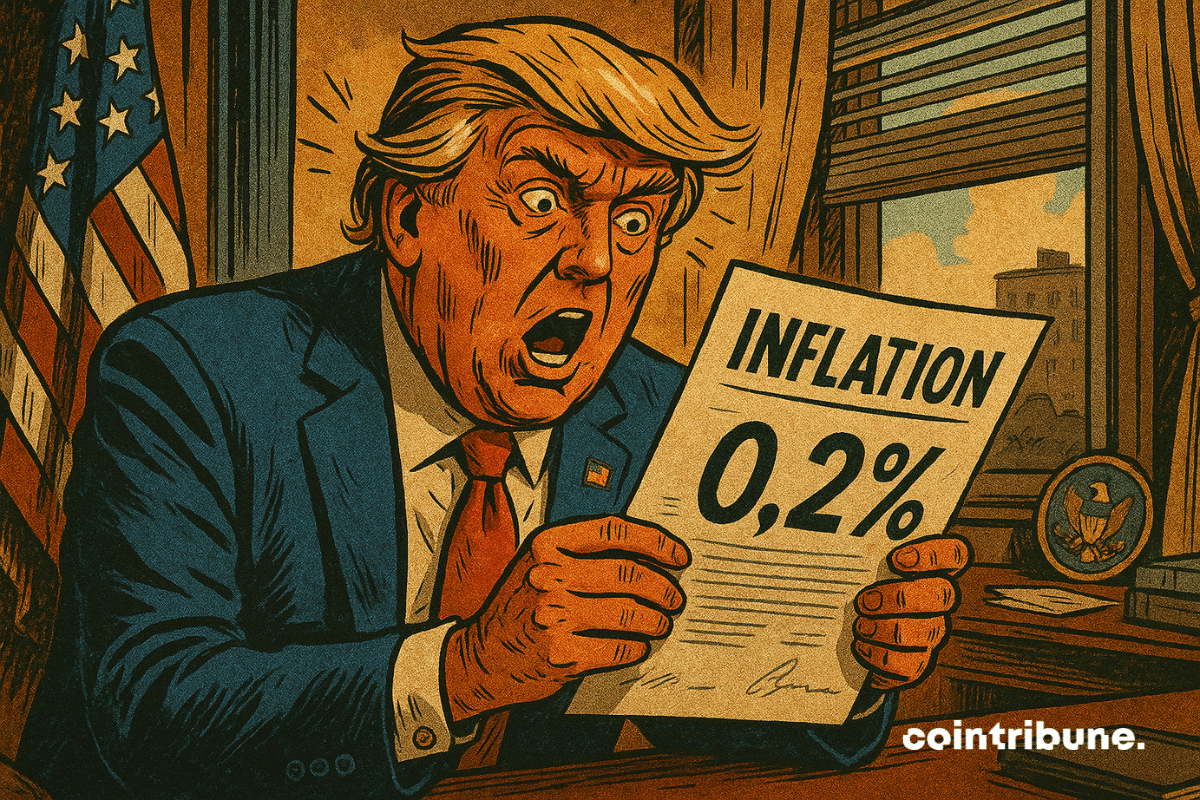
US inflation questioned all predictions of catastrophists in April and dropped to 2.3 %, despite the entry into the validity of massive customs tariffs from Trump’s administration. This unexpected decline raises a worrying question: What if analysts dramatized the impact of protectionist measures? Are the fears of the inflationary spiral exaggerated?
In short
- Inflation dropped to 2.3 % in April compared to 2.4 % in March, its lowest level since 2021.
- Trump’s customs tariffs have not yet brought the expected inflation effect.
- Trade agreements with China and the United Kingdom could reduce the impact.
- Experts in the coming months provide significant effects.
American inflation declining despite the customs tariffs of Trump
The US Labor Statistics Authority published data on May 13, which causes the prophets of misfortune reddish: American inflation slowed the third month in a row and in March to 2.3 % in April.
This decline has been the lowest increase in February 2021 and paradoxically closer to the US economy closer to the goal of 2 % set by the federal reserve, just at a time when everyone predicted the opposite.
The consumer price index (IPC) increased by only 0.2 % in April compared to March, while economists, convinced of the immediate Trump effect, tapped an increase of 0.3 %.
Even more surprising with the basic IPC, which eliminates volatile ingredients such as food and energy, has also increased to an increase of 0.2 %and resisted all predictions.
However, this peace hides a contrasting sector development. Food prices fell by 0.1 %, the first since 2020, while energy was reflected in 0.7 %after the previous month dropped 2.4 %. Vehicles with heavy IPC goods maintain a stable annual increase of 4 %.
Delayed but inevitable effects?
Given these embarrassing persons, analysts are looking for explanations to save alarming predictions.
In early April, the US President effectively introduced a reference rate of 10 % on most imports, with the rights to Chinese products of 145 % and 25 % for automotive, steel and aluminum.
Beichen Lin, head of Russell Investments strategist, seeks to justify the gap:
Companies probably formed shares before prices come into force, which delay their impact on inflation.
A practical apology that has been introduced by UBS, which now discourages its catastrophic prediction between May and October.
Meanwhile, commercial behavior proceeds. The agreement with China determines the price reduction of 115 points for 90 days, while the Agreement with the United Kingdom liberates certain strategic sectors, indicating a more nuanced approach than the announced apocalypse.
JPMorgan was also alarm, which increased the likelihood of a global recession to 60 %. The bank estimates that these protectionist measures will cost US consumers $ 700 billion, which corresponds to 2.4 % of GDP.
It seems that the US economy will withstand the darkest predictions: inflation that slows all expectations and customs tariffs whose apocalyptic effects are always expected.
This peace can only be temporary and leaves expectations in anticipation of the next Fed’s decisions and the development of international trade. Only the coming months will reveal whether this resistance continues or whether the delayed impacts become material.
Maximize your Cointribne experience with our “Read to Earn” program! For each article you read, get points and approach exclusive rewards. Sign up now and start to accumulate benefits.

Passionate Bitcoin, I like to explore meanders blockchain and cryptos and share my discoveries with the community. My dream is to live in a world where privacy and financial freedom is guaranteed for everyone, and I firmly believe that Bitcoin is a tool that can make it possible.
Renunciation
The words and opinions expressed in this article are involved only by their author and should not be considered investment counseling. Do your own research before any investment decision.