19:21 ▪
6
min at reading ▪
Washington is preparing to delete one of the flag rules set after the financial crisis in 2008. Discreet but decisive reform is going to redefine the basics of US banking regulation. Indeed, the regulatory authorities plan to modify the “additional leverage ratio” (SLR), a pillar of stability after the collapse. As far as this is, this decision could disrupt financial architecture with the main consequences for the world economy.
In short
- The United States predicts the softening of the lever ratio deposited after the 2008 crisis.
- The aim of this reform is to release capital to support the markets of economics and bonds.
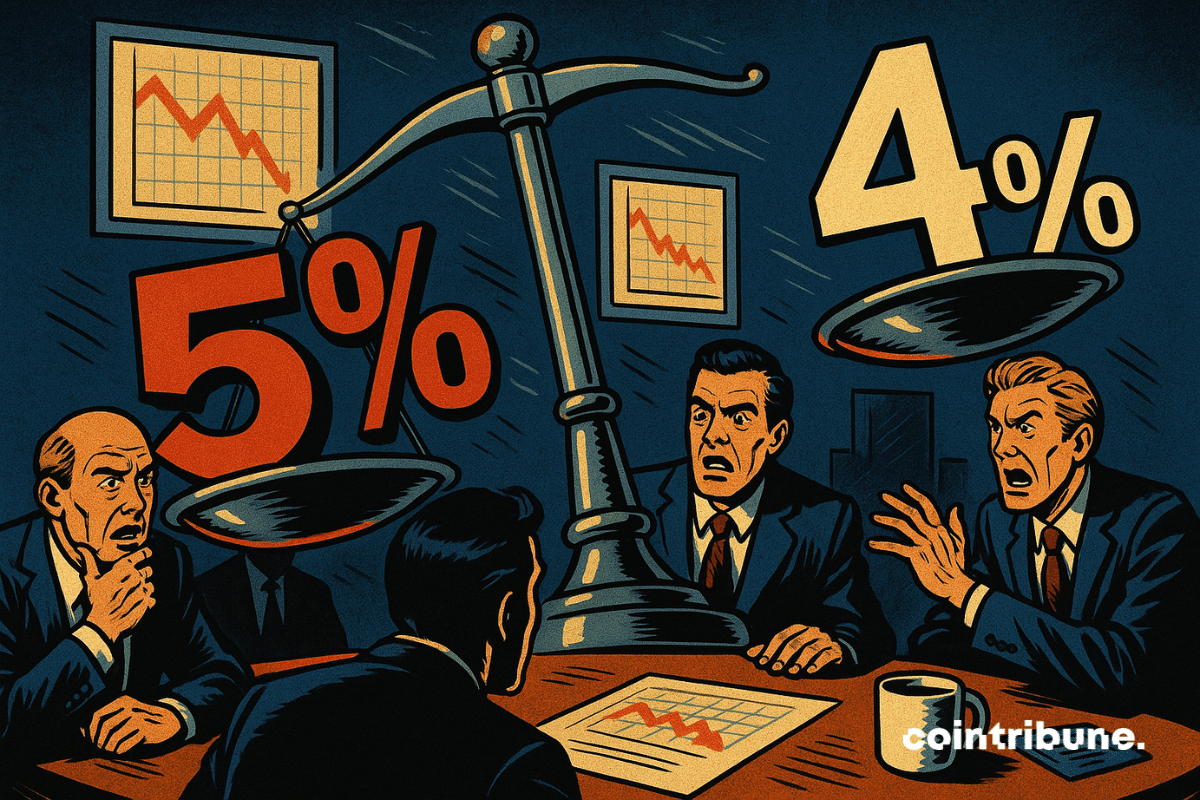
- SLR today limits banks to maintain 5 % of their own capital, without weighing.
- Critics are afraid of a new weakening of the financial system in the case of brutal shock.
Why lighten the SLR? Supporters want to run the economy
For promoters of this reform, the goal is clear: Adapt the banking regulation of new economic reality. The rules stored after 2008 are considered too rigid in the world where liquidity has become essential. By lightening Slr, Banks could again support the economy by purchasing additional accounts for the TreasuryAlthough more easily financed by companies.
This measure is part of Deregulatory strategy defended by Trump’s administration. The authorities intend to reinforce the competitiveness of national financial institutions.
” Penalize banks that have low -risk assets such as cash register accounts threatening their ability to promote liquidity on the market “Said Greg Baer, director of the Bank Institute Institute. Translation: It’s necessary Raise the control brakes So that the banking system can play its role in times of crisis.
In addition, some experts believe that SLR unnecessarily prevents the agility of banks in an environment where adaptability is essential. ” The US Treasury Market can block in times of crisis partly due to SLR “He warns Darrell Duffie, a professor in Stanford.
The message is clear: No more space for maneuver It means greater resistance to the economy.
Reform that benefits banks … and the economy?
SLR softening gives oxygen to large American banks. This would allow them to release capital for financial activities considered more productive for the direct benefit of the economy. Save as JP Morgan or Goldman Sachs sees it A lever that becomes a pillar of a dynamic financial ecosystem.
In addition, this change would support the restoration of certain operations neglected since 2014. A public debt market that is now dominated by hedge funds and high -frequency traders.
This reform could also reduce the cost of loans by increasing demand for public securities. Donald Trump sees the opportunity to strengthen the US economy everything By facilitating state expenditure to make it easier. Another alternative to bitcoins and other cryptocurrencies that appear to be likely.
Many observers also recall that the current requirements of the SLR in the United States (5 %) are much stricter than in other regions of the world where they differ between 3.5 %and 4.25 %. Supporters of reform therefore consider this to be a simple balance.
However, positive effects indicate Cautious implementationE. The economy is sensitive terrain and any active lever can cause unexpected side effects. The debate is intensified in this gray area.
What was the SLR and why was it founded?
SLR was introduced in 2014. It requires large banks to hold a certain percentage of capital compared to all their assets, without weighing the risk. The aim of this rule was to prevent the economy from immersing into the crisis, as in 2008.
Specifically, here’s what to remember:
- Eight largest US banks must maintain capital equivalent to 5 % of their assets;
- In Europe or Asia, the ratio is between 3.5 % and 4.25 %;
- In the case of stress in the markets, this pillow limits chain bankruptcy;
- The ratio is calculated without taking into account the specific risk of each asset;
- Its reform could increase the share of banks in public debt, estimated at $ 1.8 trillion out of a total of $ 28 trillion.
However, the criticism does not correspond. According to Senator Elizabeth Warren:
These proposals would expose our economy the risk of another accident paid by taxpayers.
Translation: The 2008 memory remains alive.
While the SLR reform is approaching, further decisions are complemented by this great maneuver. The Currency Manager (OCS) office has recently entitled US banks to buy, sell and maintain cryptocurrencies. This convergence between banking deregulation and opening digital financing reflects a clear ambition: strengthening the economic power of the United States in a rapidly changing world.
Maximize your Cointribne experience with our “Read to Earn” program! For each article you read, get points and approach exclusive rewards. Sign up now and start to accumulate benefits.

Blockchain and crypto revolution! And the day when the impacts will be felt on the most vulnerable economy of this world, I would say against all the promises that I was there for something
Renunciation
The words and opinions expressed in this article are involved only by their author and should not be considered investment counseling. Do your own research before any investment decision.